
Binary Paradigm,
Methodology & Economics
Rodney Shakespeare, Simon Mouatt & Peter Challen
Read the original website’s argument as flowing text, illustrated with its accompanying images. Appendices and references are restored from the saved publication.
The text presents the authors’ views and proposals. The audio is a separate introduction. Illustrations are supplied from the original website materials.
Introduction – fifty nine false assumptions
Our world is in the throes of financial, economic and environmental crises with the possibility of extreme collapse. The fundamental cause of the crises is that mainstream economics is based upon fifty nine false, interconnected assumptions about reality.
As a result, the prevailing major paradigm (or societal view of reality) is outdated, inaccurate and static thereby being incapable of providing solutions for global problems. The problems include disintegrating social order; incessant war; authoritarian tendencies; and uncertainty as to whether artificial intelligence will be for the benefit, or detriment, of the human race.
Unless the outdated paradigm is rejected and a new, accurate and dynamic one substituted instead, the problems will remain and extreme collapse becomes inevitable.
A. Paradigm and Reality

1. A major paradigm is a societal way of understanding reality
Any paradigm is a mindset or mental framework by which a person or group views and understands reality.
A major paradigm, however, is on a much larger scale. It is the prevailing societal view (or perspective) for understanding reality and is an intellectual structure based on interconnected factual assumptions and underpinnings which appear, at first, to be self-evident truths (but which, later, can be found to be false).
Needless to say, it is important that any understanding be accurate because, without accuracy, the consequences are certain to include inefficiencies, distortions and manifestations of injustice.

2. Falsity of assumptions and impending catastrophe
All major paradigms decide what does, or does not, happen in society. It is therefore the falsity of the fifty nine mainstream assumptions (about reality) which is the fundamental cause of the problems besetting the world today.
Unless that falsity is directly addressed by a new, accurate and dynamic comprehension of reality, there is no hope of avoiding impending catastrophe.
3. A difficulty – over time, reality changes
However, there is always a difficulty with reality – over time, new facts, situations, aspects and connections emerge into existence as do new technologies e.g., better telescopes, machinery, railways, the internet. Therefore, the world is always in flux – in transition – and so reality changes.
4. Societal understanding of reality does NOT change
Consequently, if society is not to become profoundly outdated, deeply stressed and unjust, its understanding of reality must change as well. Nevertheless, even though a change in the societal understanding of reality is badly needed, the understanding – in many key aspects – does NOT change and remains static.
The stasis happens because the old understanding has become locked into the institutions, laws and practices of society with many vested interests – particularly those of the elite – determined to maintain the status quo.
As a result, there is a huge disconnection between reality (which has changed) and the static, societal understanding of reality (which has not).
5. The disconnection results in failure to find solutions
The disconnection manifests itself in an obsolescent major paradigm. This is dangerous, even disastrous, because the obsolescence causes a fundamental failure to find solutions to societal (and, ultimately, global) problems.
6. Urgent need for a paradigm shift
It is therefore always urgent that an obsolescent, inaccurate and static major paradigm should be replaced by a new, accurate and dynamic one. It must be dynamic since society itself (together with its economy and evolving technology) is dynamic.
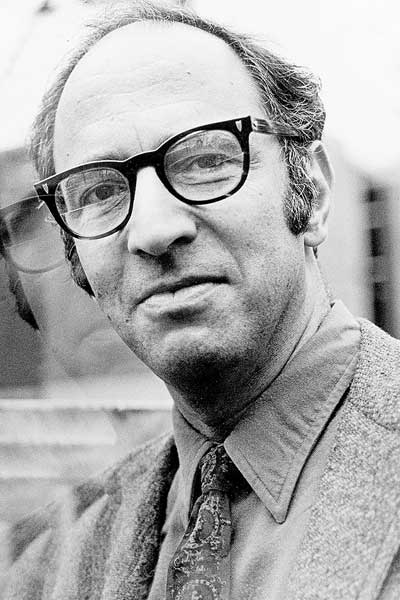
The replacement is called a paradigm shift which, as Thomas Kuhn pointed out, is a total revolution because any new paradigm is incompatible with the old one i.e., the new completely replaces the old (Kuhn, 1962).
Indeed, it is impossible to understand the new by using the terminology and concepts of the old.
B. Factors in Paradigm Shift
1. The Hollingsworth research – and its suppression
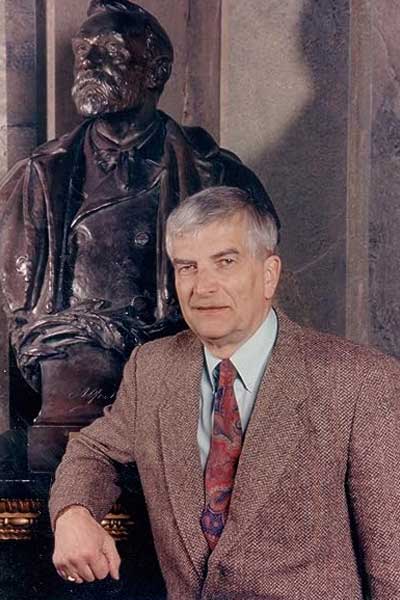
Whereas Thomas Kuhn described paradigm (Kuhn, 1962), the credit for explaining the factors contributing to paradigm shift goes to the remarkable – and massive – research done by Professor Rogers Hollingsworth and colleagues.
The all-encompassing research, extending over human history, addressed the factors contributing to any paradigm shift and so the possibility of considerable benefit for humankind. It cost a substantial amount of dollars and was done at the behest of the USA government.
Nevertheless, NB, the research is not widely known and its precise location is now uncertain because it may have been suppressed. The exact reason for the suppression is unknown but could be related to nature of the third factor or to the future of the USA.
2. The three factors in the creation of major new paradigm
The Hollingsworth researchers discovered that three factors contribute to the creation of big, new, paradigm-altering ideas:
i) First factor – widespread, conservative knowledge and understanding of the main academic subject
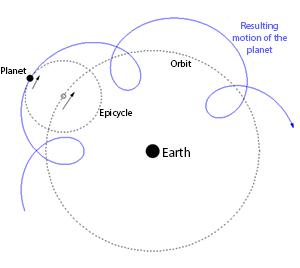
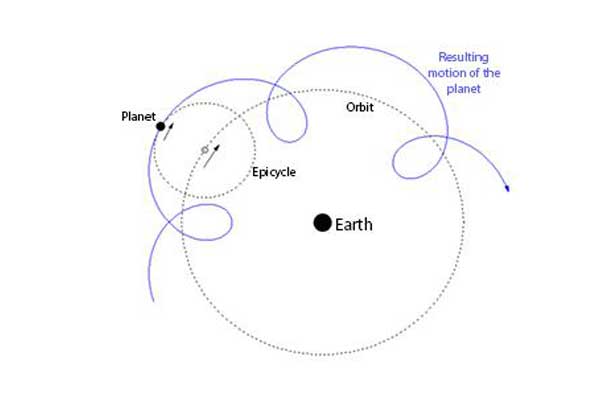
The first factor is obvious. It is widespread, conservative knowledge and understanding of the main academic subject with its factual assumptions about reality. An example is the old Ptolemaic paradigm which, seeing the apparent movement of the sun, put the Earth at the centre of everything. The assumptions and argument went like this:
the sun goes around the Earth and therefore
the Earth is the centre of the universe and therefore
the existing rulers have been appointed by God and so have a Divine Right to rule!
Please note that:
the assumptions are interconnected
the Ptolemaic paradigm created beneficiaries (i.e., the rulers) whose existence depended upon maintenance of the old view of reality
ii) Second factor – tension between conservatives in the centre of the academic subject and progressives on the edge
The second factor is less obvious. It is the tension which arises between:
conservatives in the centre of the subject (who have an outdated view of reality and a vested interest in maintaining it)
and
progressives on the edge of the subject (who want reality to be accurately understood and who do NOT have a vested interest)
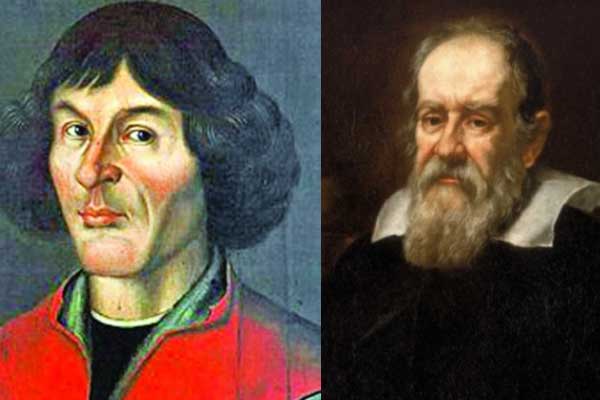
In the case of the Ptolemaic paradigm, the tension arose as a result of better information coming from more powerful telescopes. On the one hand, the conservatives interpreted the information as revealing that the planets move in little circles or ‘epicycles’ whilst also going around the Earth – this meant that the Earth was still at the centre of the universe.
On the other hand, the progressives (e.g., Copernicus and Galileo) realised that the new information was establishing factual assumptions opposite to those of the Ptolemaic paradigm, namely, that:
the Earth goes around the sun and therefore
the Earth is not the centre of the universe and therefore
the old Ptolemaic paradigm had been demolished!
Consequences of the demolition
The consequences of the demolition went much further than scientific conclusions because the old paradigm was also the basis of the existing power structure. Indeed, it logically followed that, if the Earth is not the centre of the universe, then the existing rulers had not been put into power by God. In short, there was no Divine Right and so there arose huge political implications as to who had the right to rule and whether there was a need for fundamental change….
An extraordinary thing – there is a similar situation today
Moreover, it is an extraordinary thing that, today, there is a situation of tension similar to the one existing at the time of the Copernican Revolution! Thus, firstly, just as the old astronomy paradigm created beneficiaries who ruled the world so, today, the prevailing economics paradigm creates beneficiaries – members of the global elite – who rule the world. Secondly, there is tension between conservatives upholding mainstream economics and progressives who do not.
The result is that those who dare, even minimally, to doubt the worth of the prevailing paradigm are reviled as socialists, communists (or even terrorists). Indeed, intolerance is building with censorship and fines at first, imprisonment for some – and worse coming in the future.
iii) The third factor – some force of opposite mindset, powerfully present, coming from outside the academic subject and acting on the progressive thinking at the edge
The third factor is not at all obvious. It is some force of opposite mindset, powerfully present, coming from outside the academic subject. Moreover, the force of opposite mindset interacts with the progressive thinking at the edge of the subject to create the new paradigm. But what ‘force’? What ‘opposite mindset’? And what is meant by ‘powerfully present’? Furthermore, how can any idea come ‘from outside’? After all, ideas arise inside people’s heads!
Necessary elements of the third factor
The third factor has three necessary elements:
a) some force of ‘opposite mindset’
An ‘opposite mindset’ is a challenging state of mind determined to:
meticulously examine the facts – thus Copernicus and Galileo studied the quick-slow, forward-back movements of the planets and the light-dark alterations in their illumination
correctly identify the meaning of the facts and
do so in complete opposition to conventional thinking. (Such challenge, of course, must be well-motivated and without negative or unconstructive intent.)
Moreover, NB, although the challenge must at first be wholesale, it need not necessarily result in a rejection of all aspects of the subject. Now remember that, in the old geocentric (Earth-centred) paradigm, God had appointed the world’s rulers. But the new heliocentric (sun-centred) paradigm was an opposite with revolutionary consequences. Inevitably, the tension between conservatives and progressives escalated becoming very nasty indeed – the progressives were accused of being agents of Satan or the Devil with the thumbscrew, rack and lethal burning practices of the Inquisition their fate. And so the ‘force of opposite mindset’ can only be a radical willingness to challenge everything about a subject even though excommunication, imprisonment, torture and – possibly – death are the penalties.
b) ‘powerfully present’
The second necessary element is the requirement for the force of ‘opposite mindset’ to be embodied in a supporting group which is powerful i.e., capable of exercising influence. This is not a light requirement because even a progressive academic journal, for example, can easily find that it is ignored by conservative journals dominating the field. Strong co-operation with others, therefore, is essential.
c) ‘coming from outside’
The third necessary element is that the force of ‘opposite mindset’ must be obviously independent and different so that, in effect, it comes ‘from outside’. Moreover, the force should be distinctive (Choudhury, 2006, Ahmed, 2005,)



3. Exemplars of opposite mindset ‘coming from outside’
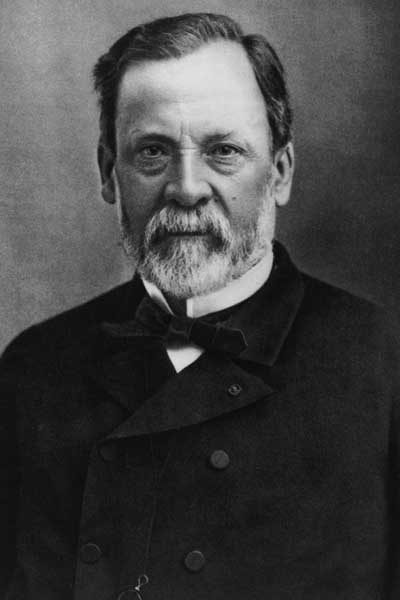
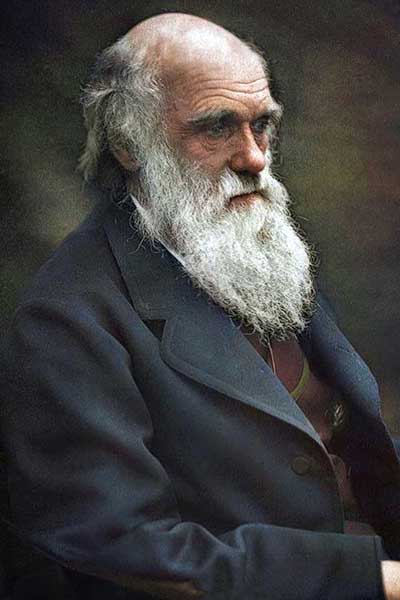
Apart from Copernicus and Galileo, there are other exemplars of ‘opposite mindset’ who came ‘from outside’ and greatly benefitted humanity. Indeed, inscribed in gold within the Annals of History, are the names of:
Louis Pasteur who essentially established that the invisible – rather than the visible – is the source of disease
Charles Darwin who proved that animals and plants did not recently enter the world all at once but, instead, evolved over millions of years
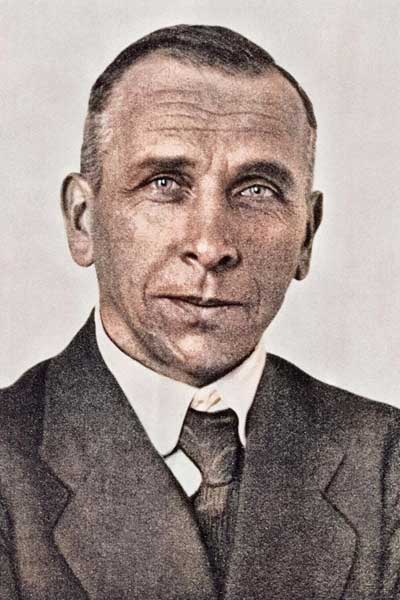
Alfred Wegener who, taking into consideration a wide range of facts, explained that the world’s surface has tectonic ‘plates’ in continual motion and is therefore not merely a static outer layer with ruptures
Barbara McClintock who showed that genes can ‘jump’ (change position)
Cecilia Payne whose accurate spectrum analysis of the sun was rejected. Like McClintock, she was disparaged for being a woman
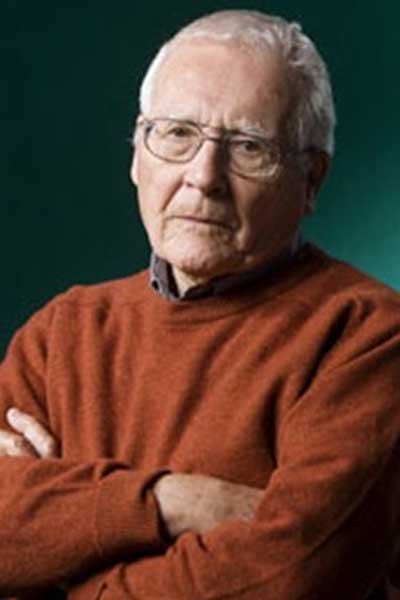
James Lovelock who, with Gaia, challenged the idea that humanity can exploit and destroy its environment without threatening its own existence. He also took into consideration a wide range of facts.
In all cases, the conservative upholders of the prevailing paradigm were proved profoundly wrong and their progressive challengers spectacularly right.
C. Evidences of Failure


Nevertheless, before there can be any change in major paradigm, there has to be widespread evidence that the old paradigm is failing and on the cusp of collapse.
Moreover, there must be widespread acceptance (by the academic community and by politicians and by members of the public) that the old paradigm is failing.
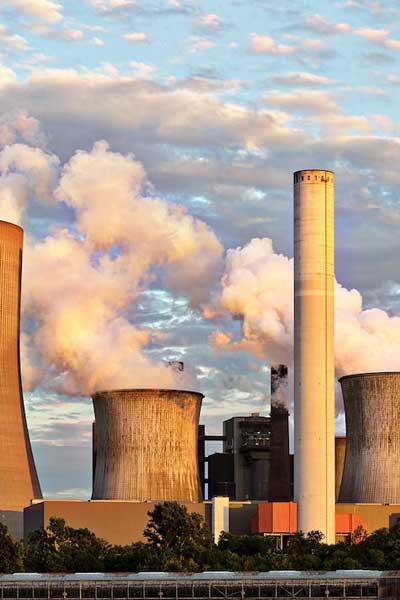
Here are some evidences of failure:
Ecocide. We should reflect on the pollutions and depredations which:
– put plastics in the oceans – and into our bodies
– destroy pollinators, flora and fauna
– deplete resources
– promote warming
Alas! These things happen because ‘free market’ finance capitalism views environmental matters as extraneous and imposing unnecessary cost.
Preposterous accumulations of wealth (which do NOT ‘trickle down’ to ordinary people. (Oxfam Report, 2020. Piketty, 2017.)
Exclusion from the formal economy of women and girls who, every day, do 12.5 billion hours of 24/7 unpaid caring work without which the human race cannot exist! (Oxfam Report, 2020.)
Half the world’s population exists on less than $5.50 per day. And 860,000,000 have to try to exist on $1.80 per day. (Oxfam Report, 2022.)
Moreover:-
Water and sewage situations are parlous. Globally, 10,000 people die each day from the effects of dirty water (Dirty Water).
Debt levels – personal, corporate and governmental – are higher than those of 2008 and much debt is un-repayable. A Minsky Moment approaches.
There is also:
Lamentable homelessness – yet building materials are available.
Unravelling social order and political doubt e.g., robbing of shops; Capitol trespass,
Destruction of the middle classes. In America, real middle class incomes have been going backwards for twenty five years. The exportation of jobs is one reason. Another is that the Federal Reserve has been pumping billions of dollars into the hands of the existing wealthy and not into the hands of others.
And, to cap it all, there is:
Inability to address the great technological shift which, instead of good, secure jobs, results in part-time, zero-hours-contract, ‘gig economy’ jobs which are not true jobs at all. The result is a precariat (Standing, 2011).
Sharply rising (? runaway) inflation hitting everyone.
A quadrillion (1015) dollar casino of derivatives!
Huge concentrations of private ownership by tiny groups.
Continuing migration from global South to North. As well as war, the migration is caused by finance capitalism expropriating resources and also ensuring there are no fair economies for the many (rather than the few).
In sum, there is widespread failure and, after some precipitating ‘black swan’ event, a collapse is inevitable.
D. False Suppositions and Assumptions
Mainstream propaganda supposes that a collapse is impossible because it says that finance capitalism is always:
balanced (and, if sometimes out of kilter, will soon return to equilibrium)
efficient
free and
just i.e., all people get what they deserve.
However, the supposition is preposterous – every sane person knows that finance capitalism is unbalanced; inefficient; unfree (most people are prevented from acquiring productive capital) and unjust.
The preposterous supposition arises because mainstream economics is based upon assumptions which are claimed to be accurate and so all the outcomes must be inevitable and desirable. Indeed, a complacent mainstream economics thinks – much like Pangloss (the Optimist Philosopher in Voltaire’s Candide, 1759) – that the outcomes of its assumptions are automatically the Best Possible!
But what if the assumptions – far from being accurate – are false and the outcomes – far from being the Best Possible – are patently undesirable? What happens then?
The answer is an upwelling of anger and then the impulse to find a new economics which is based upon accurate assumptions with desirable outcomes.
1. Example of false assumption – explanation for poverty
A distressing example of false assumption is the mainstream explanation for persistent global poverty – half the world’s population lives on under $5.50/day (for everything including food, accommodation, travel, medicine and dentistry).
Yet, making a deduction from a completely false assumption as to how wealth is actually created, mainstream economics claims that people are poor because they are unwilling to work and unwilling to be trained or educated.
Yes, mainstream economics – with extreme self-righteousness – claims that people are poor because they are layabouts and good-for-nothings!
That is a gross insult to billions of people who are only too willing to work IF they can get a job. Too often, however, (and even when educated), they cannot get a job and, even if they do, find that it is low-paid, insecure and (because of environmental hazard) unsafe.
Women are in a particularly precarious position.
Obfuscation
The mainstream explanation for persistent poverty derives from an outdated and obfuscatory tome – The Wealth of Nations (Smith, 1776) – which claims that, in any task producing goods or services, human labour does all, or most, of the work in creating the output. Here are the opening words of the tome:
The annual labour of every nation is the fund which originally supplies it with all the necessaries and conveniences of life.’
Indeed, in Adam Smith’s famous pin factory, humans – and not machinery – DID do all the work. The processes were specialized hand processes e.g., extruding the wire and snipping it – eighteen distinct operations. The factory efficiently produced pins because of specialised hand workers who were gathered conveniently in one place, easily bossed around and employed during set, regular hours. No machinery was involved!
So, at the time, Adam Smith was right – labour did all, or most, of the work.
The truth today
However, today, saying that labour does it all is a complete falsity which disguises the major contribution to output of the capital instruments thereby justifying the narrow, instead of wide, ownership of the capital instruments.
The truth nowadays is a near-opposite i.e., in a task, human labour:
sometimes does all, or most, of the work in creating the output
sometimes does a percentage, ranging from large to small, with the rest being done by the capital instruments
sometimes does none with everything being done by the capital instruments
NB. A capital instrument is any non-human thing involved in the production of goods or services e.g., a chicken; an acorn (it becomes an oak tree); scissors; an automated factory; land; a bridge over a river; a self-driving car; a self-opening door; a building; a house (which continuously provides accommodation (Kelso & Kelso, 1990); a road; a ship; technology; the internet – or the sun which is also a capital instrument but not one that can be owned!
In sum, in most tasks today, jobs are doing only a part of the work whilst a bigger, ever-increasing part is being done by the capital instruments.
The true explanation of persistent poverty
Thus the true explanation of persistent poverty today is:
(In addition to lack of good jobs), a lack of ownership of, and access to, what:
really does create the wealth i.e., technological and natural productiveness as embodied in capital instruments
finances the acquisition of technological and natural productiveness i.e., low cost capital credit (Ashford & Shakespeare, 1999.)
legally consolidates technological and natural productiveness (i.e., capital ownership)
together with
the burden of compound interest and
a thoroughly outdated understanding of economic reality
But mainstream economics, always acting as a gatekeeper protecting the estates of the elite, ignores this true explanation preferring the belittlement of any explanation for persistent poverty other than its own.
2. Another false assumption – ‘trickle-down’ theory
Another false assumption is ‘trickle-down’ theory which says that wealth ‘trickles down’ from rich people to poor. Yet reality contradicts the theory. Thus the world’s richest 1% has more than twice the wealth of 6.9 billion of the world’s population and the twenty two richest men have more wealth than all the women in Africa (Oxfam, 2020). That is astonishing!
The truth is that ‘trickle down’ does not, and cannot, happen – the rich never spend all their money and, in any case, it is impossible for them to do so because their wealth increases faster than they can spend it…!
More false assumptions are set out below.
E. Today’s False Assumptions USED to be True!
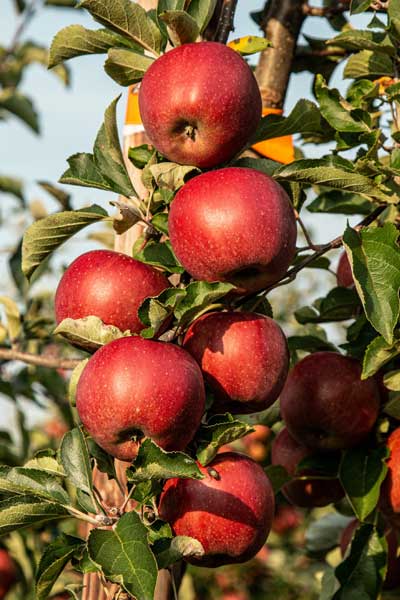
Here is a truly astonishing thing – no matter how false are the mainstream assumptions of today, at some time in the past many of them DID represent fair and reasonable apprehensions of reality i.e., they USED to be true!!
Below is a brief look back as to how five of today’s particularly pernicious false assumptions came into existence.
False assumption which USED to be true – In any task producing goods or services humans do all, or most, of the work in creating the output.
This false assumption has already been discussed in relation to the explanation for poverty. However, it is so fundamental to the structure of the old, outdated paradigm that a little further elucidation – in relation to capital instruments – is necessary.
Prior to the start of the Industrial Revolution around 1750, human labour DID do all, or most, of the work (as stated by Adam Smith). Nevertheless, at the same time, it was also true that some highly-productive capital instruments were already in existence e.g.:
windmills and keystone bridges (operating by themselves)
pack-horses (carrying loads largely by themselves)
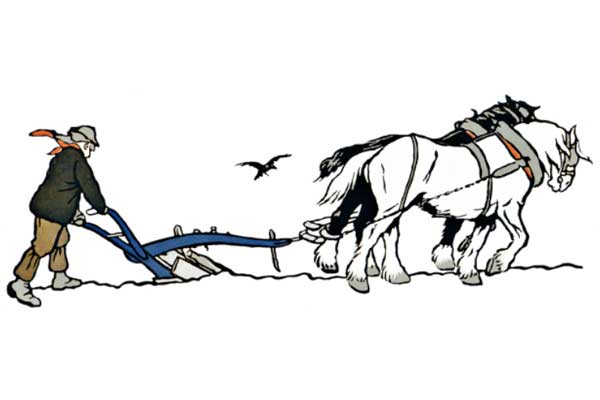
ploughs, wagons, lifting equipment, ships and brick kilns (all of which did a lot of work but also required human – or animal – input).
In summary, although capital instruments existed in Adam Smith’s time, it was still broadly true that humans did all, or most, of the work in creating the output.



But that was then and not now. Things change. Today the capital instruments are doing more and more of the work in creating the output and so, if there is to be a true balance of supply and demand, there must be wide ownership of productive capital instruments.
False assumption which USED to be true – Banks lend existing money i.e., lend a real thing. Mainstream propaganda deliberately cultivates the belief that the banks lend existing money. But this is completely false. Today’s bank money is created out of nothing by the pressing of computer buttons! “When banks extend loans to their customers, they create money by crediting their customers’ accounts.” However, long ago, money was NOT created out of nothing but was something solid e.g., copper, silver, gold – even stone disks. Therefore money was commodity money i.e., a real thing.
Of course, governments – and bankers – then realised they could create more money for themselves through debasement i.e., by lessening the amount of copper, silver or gold in a coin, or by printing more banknotes. Thus, although there was debasement, in theory (and particularly in the widespread propaganda) the principle of commodity money remained and so people believed that the lent money was a real thing which maintained its value.
But that was then and not now – things change and today’s reality is electronic binary digits existing on some computer (McLeay, 2014).
False assumption which USED to be true – Interest is necessary.
However, interest is an unnecessary cost put on top of administration cost. Moreover, in order to hide the true amount of the interest, bankers long ago confused everybody by conflating (i.e., mixing together) the interest with administration cost, principal repayments and (sometimes) a sum for collateral so that they could not be distinguished from one another. Bankers have always been able to do this because of their negotiating power – “I have the money and if you want some, it’s on my terms, not yours.”
Thus any distinction between necessary administration cost, principal repayments, collateral and interest was obscured and, in practice, lost. A fair administration charge is always necessary, but interest is not.
And so it was true (in the sense that, because of the confusion, it was believed) that interest is necessary. But that was then and not now. Things change. Today, when money is created out of nothing, it is outrageous that interest is unnecessarily added. (The deleterious effects of interest are in Appendix Three.)
Furthermore, people today are perfectly capable of distinguishing between administration cost (which is necessary) and interest (which is not).
False assumption which USED to be true – Population levels should not, and cannot, be voluntarily reduced.
In past times, humans did create most of the output and so there was no reason to limit (or aspire to reducing) the population which did the creation.
Moreover, starvation, war and disease devastated populations with the consequence that, at the very least, population replication was always essential.
Furthermore, the past was a time when, generally, the world’s natural resources were not being strained.
Thus, in the past, it was true (i.e., it was believed) that population levels should not, and cannot, be voluntarily reduced. But that was then and not now. Things change. Today, it is observable fact that when a society has a reasonable standard of living, good health and education with status for women, population levels DO stabilise and reduce – voluntarily. This happens primarily because children are not generally needed to provide for their parents in old age and the death rate for children is low.
False assumption which USED to be true – (The concept of) homo economicus is an accurate characterisation of human psychology.
Homo economicus is the mainstream concept of psychology which sees ALL humans as ‘rational’ meaning ‘self-interested’. In practice, this means ‘endlessly selfish and greedy’ i.e., wanting more and more material possessions and never, ever, being satisfied.
Mainstream economics claims that homo economicus is fundamental psychology which identifies unalterable human characteristics and, as such, cannot be changed. With some exceptions (e.g., of gift economies discovered by anthropology and some commendable individuals), selfish, greedy homo economicus was – and still is – a fair characterisation of human psychology.
The evidence is seen in today’s societies where it is impossible to stop the desire for endless material accumulation with its disastrous consequences for fauna, flora, resources and the environment.
BUT the falsity today is in claiming that homo economicus cannot be changed. On the contrary, homo economicus CAN be changed because human psychology DOES change when human circumstances change (see section H).
The cause of the falsity – things change
In summary, the five examples of today’s particularly pernicious false assumptions came into existence because, at some time in the past, they were reasonable (or at least believable) representations of reality.
But that was then and not now. Things change.
It therefore behoves us to keep our basic assumptions under review so that we do not make complete fools of ourselves by being egregiously out of date.
F. Efficacious Paradigm, Methodology and Economics
1. Efficaciousness of the new paradigm
The new paradigm is efficacious because it is:
accurate
internally consistent


comprehensive
simple – the simplest explanation of the facts is best (Occam’s Razor); and
fruitful i.e., revealing new phenomena, new relationships and seemingly endless beneficial possibility.
The efficaciousness enables a new methodology.
2. The new methodology – EDCReD
After paradigm, methodology generally decides everything e.g., the results of research, proposals for reform (or not), policy and outcomes. Inevitably, the present outdated paradigm results in an outdated methodology and so a failure to find badly needed solutions.
Yet, fortunately, arising out of the new, accurate and dynamic paradigm, there is a new methodology – EDCReD – which:
Examines the facts and, like Alfred Wegener and James Lovelock, takes into consideration a wide range of facts
Detects the assumptions about the facts made by mainstream schools
Checks to see if the mainstream assumptions are accurate deciding, for example, if the mainstream reason for persistent poverty is true
Reverses inaccurate assumptions (whereon the reversals or near-reversals are seen to be true!) This is done fifty nine times!
Deduces new, beneficial policies from the reversed assumptions
By examining the facts, then checking if mainstream economics accurately understands them (and, when it does not, substituting a more accurate understanding), EDCReD is following in the footsteps of Copernicus and Galileo who used scientific induction. (This contrasts with mainstream economics which, like the old Ptolemaic system, deduces its policies from false assumptions.)
3. EDCReD is involved in the epistemological challenge
Furthermore, epistemology is essentially about methods for ascertaining the truth and so EDCReD is central to the epistemological challenge because it:
includes ethics
is holistic, embracing many subjects
understands change over time
is positive as well as normative
is investigative and inductive (by accurately establishing the facts and their meaning) but also deductive in finding new policy from the facts.
The new economics/politics then arises from the challenge.
4. All present economics/politics is on a left-right line
However, the new economics/politics cannot be understood without first grasping that ALL of the old economics/politics exists somewhere along a line (i.e., a linear spectrum) going from left to right. On the left is Communism and on the right is some form of laissez-faire capitalism. Keynesianism is somewhere in the centre.
More understanding then comes with the recognition that ALL of the old economics/politics is founded upon similar false assumptions, e.g., that: in a task, human labour does all, or most, of the work in producing the output – this is not true today interest is always inevitable and necessary – this is not true today it is impossible for everybody to own substantial amounts of productive capital – this is not true today economics does not need to be ethical, holistic or appreciative of change over time – untrue!
5. The new economics/politics is outside and beyond the linear spectrum
Finally, full understanding occurs on realising that, whereas ALL of the old economics/politics is somewhere on the linear spectrum, the new economics/politics is OUTSIDE AND BEYOND (i.e., impossible to be placed upon) the linear spectrum!
6. Fresh definition of economics and expansion of domain
As a result of being outside and beyond the linear spectrum, there arises a fresh definition of economics which is not only modern, empathetic and inclusive but which also expands the domain.
Economics is the science of production, distribution and consumption of wealth, goods and services always ensuring a truly balanced economy and taking into account the wellbeing of all people and responsibility towards fauna, flora, ecosystems, environment and resources. It works towards homo economicus evolving into homo reciprocans.
G. Practical Applications of the New Economics
Interest-bearing loans are the rule today. However, in future, many loans will be interest-free because there is no reason not to have such loans other than the outdated assumptions and practices now bringing our planet to destruction.
Therefore the new economics may be summarised like this:
THAT, in a truly modern society, for the purposes of addressing:
major environmental issues (including global warming)




the conservation of natural resources
the necessity for sustainable economies
AS WELL AS ensuring that money is related to the real economy and its spreading,
THERE ARE NO INTELLECTUAL OR PHYSICAL BARRIERS to the creation by public banks, national banks or international banking institutions of a large supply of interest-free loans (locally administered by the private banking system and public banks on wide ownership, small business/farm, real economy and environmental principles charging a fair administration cost but no interest)
AS LONG AS the money is repaid and cancelled leaving behind in existence the productive or environmental asset for which the loan was originally extended. This is counter-inflationary.
NB:
Whilst limiting the ability of the private banking system to create money out of nothing (by a gentle rise in required banking reserves which, in certain circumstances, can go down), a national bank may create interest-free (repayable) money IF it is used to spread the real economy, over time, to every person in society and also for environmental purpose. In this way a large part of the economy becomes free from interest.
The total amount of overall interest-free creation is, in practice, always limited by the requirements for repayment, wide ownership and environmental benefit.
Interest-free loans are rapidly repaid and borrowers are not weighed down by the burden of interest, particularly compound interest.
Only periodic inspection of the private banks would be necessary. Any bank abusing the privilege of being allowed to administer the interest-free supply would lose the privilege.
1. Economic Democracy – Binary Basic Income
If a person has a reliable job, that’s good, as is a small business. However, computers and incredible new technology are destroying secure well-paid jobs and replacing them, if at all, with temporary, insecure, low-paid, ‘gig economy’ ones. Unfortunately, mainstream economics has no way of ensuring the equivalent of good jobs.
However, there is a way – Binary Basic Income – which compensates for decrease in jobs by substituting capital ownership not only for employees, but also for non–employees. Thus the new paradigm creates Economic Democracy by spreading capital ownership (and its income) to every person in society.
NB. In the new economics ALL large corporations must pay out all their earnings all the time. In order to invest, therefore, they may have interest-free money AS LONG AS wider ownership is furthered. This is a main principle of Binary Economics.
Over time, people will come to own a basket of full-payout shares in the big corporations with payouts between five and eight times today’s payouts (Ashford & Shakespeare, 1999. Kelso & Kelso, 1990).1 This ensures that daily economic power (i.e., income) is in the hands of everybody thereby implementing a balance of supply and demand as required by Say’s Theorem (i.e., Supply = Demand). Mothers with children, therefore, will be able to bring up their children without financial pressure. Even small children will have income, sufficient for basic need. At the age of five (if education is not free) the income increases to pay for basic school fees, with increases at eleven and sixteen. Thereafter the income stays as part of the adult Competence defined as:
A capital estate large enough to supply current consumer income sufficient for supporting a reasonable life style (taking account of other people as well as environmental and resource considerations).
Research indicates that, aged sixty five, an adult would have an Universal Basic Income of (2005 figures) $26,000/year AND a Capital Accumulation of $200,000 with both figures increasing after the age of sixty five.
NB. The figures would be very much higher today. The Competence is in addition to any income from a job.
2. A wide range of uses
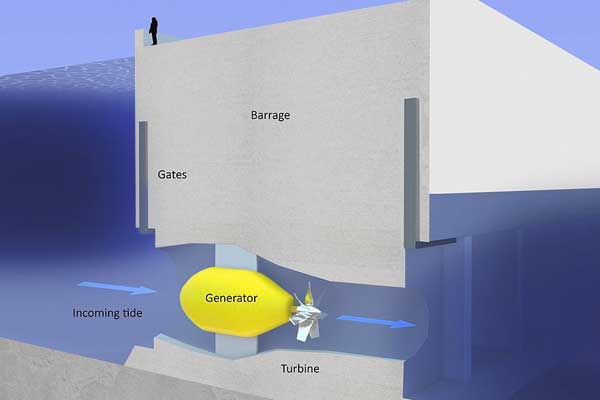
Interest-free money is important for water/sewage projects and generation of clean electricity e.g., geothermal power, solar towers, underwater turbines, wave machines and tidal lagoons which are easily-constructed.
Gravity batteries (also easily constructed) store electricity and there are new technologies, e.g., bio-oil from algae – important for the local generation of energy.
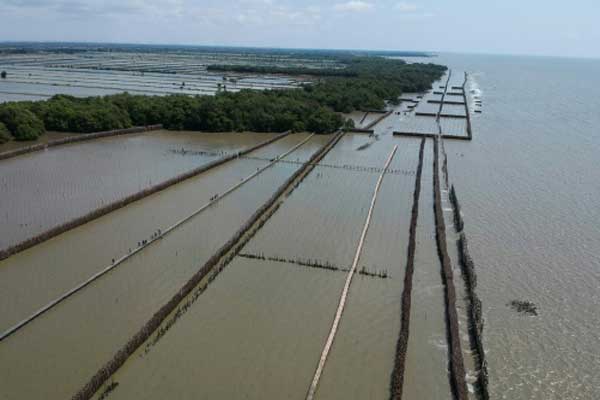
Mangrove-crested sea barrages are capable of sequestering as much CO2 as rain forests (Mangroves).
3. Colonisation and decolonisation – A.I.D.S.
As a result of compound interest, many countries have A.I.D.S. – Accumulated International Debt Syndrome (Anjum, 2004) – being:
entrapped into everlasting debt
controlled by outsiders and
having their resources expropriated.
The situation is dire. Forced to beg for relief from the International Monetary Fund, they become owned lock, stock and barrel by the banking elite. This shocking situation, however, is directly addressed by the new Universal economics and finance which decolonise countries and enable their independence by ensuring that they control and issue their own interest-free money supply rather than always borrowing foreign money at extortionate rates of compound interest.
4. Call for Reparations – and their satisfaction
There is a need to remedy colonial, war, slavery and other injustices perpetrated on populations in the past not forgetting, in the present:
unpaid women
all those people denied access to capital income
and so there comes a Call for Reparations. The Call can be satisfied by implementing the new economics!
5. Co-operative and participatory business structures
a) Mondragon co-operatives
The Mondragon region of Spain is famous for its development of co-operative businesses resulting in regional prosperity and an absence of rich-poor extremes. The co-operatives began in 1956 and now employ 82,000 people. They represent a humanist concept of business and a philosophy of participation. The new economics forwards Mondragon co-operatives.
b) The Employee Share Ownership Plans (ESOPs) of Binary Economics
Binary Economics, too, is humanist and participatory. It is famous for being the originator of the Employee Share Ownership Plan (ESOP). The new economics forwards Binary Economics – www.binaryeconomics.net
6. The use of interest-free loans is not new
There is nothing new in the large-scale use of interest-free loans. The island of Guernsey (which has minimal debt) has used the loans and so has Malaysia. Over the period 1939-1974, Canada used the loans and, today, many Canadian municipalities are demanding their use to upgrade infrastructure. After 1935, New Zealand used the loans – for hydropower schemes, railways, state housing etc. – and had a prosperous period. In the late 1940s Taiwan used the loans to spread ownership of farm land without harming the rich.
H. The Future



Ever-onwards goes the march of technology, often in the form of automation, with more and more people becoming aware that their job (or their chances of a job) could soon be disappearing. So what will be the future? It will be :
EITHER
The Great Reset
The Great Reset elitists say – thereby accurately contradicting present government propaganda which claims there will always be good jobs for everyone – that most traditional jobs will disappear.

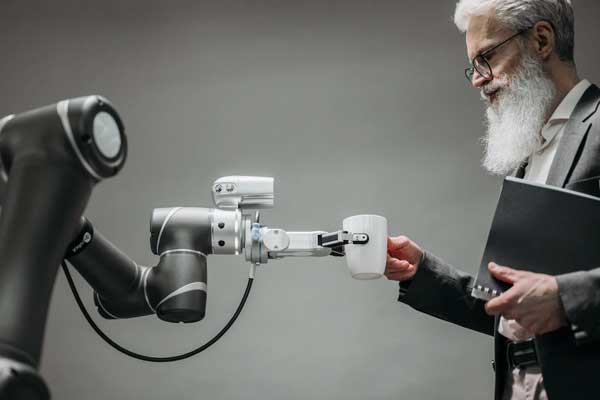

They then say that the bulk of humanity will be on the scrap heap having become, in their nasty little phrase, ‘useless people’.
Indeed, with amazing candour, Yuval Noah Harari (adviser to the World Economic Forum) trumpets the unwholesome truth as seen by the World Economic Forum – in future, the vast majority of the population will not be needed. ‘We just don’t need the vast majority of the population because the future is about developing more and more sophisticated technology, like artificial intelligence and bioengineering.’ (Harari – 1.)
Thus they (i.e., the World Economic Forum and the Great Reset elite including the Bilderberg Group whose tentacles already control much of the world), don’t need ‘useless people’ who will be the inevitable result of:
the growth in artificial intelligence
the arrival of the 4th Industrial Revolution
bio-engineering
IoT – the Internet of Things. (There are already twenty two billion devices ‘talking’ to each other!)
drones, voice recognition, virtual assistants, payment systems, translation software
all of which are eliminating jobs.
Harari, moreover, asks the question:
‘What to do with all these useless people?….When they are basically meaningless, worthless….?’ Harari begins to answer his own question. The ‘useless people’ will be controlled by:
‘A combination of drugs and computer games.’ (And, NB, by versions of the Metaverse.)
He subsequently goes further and refers to:
‘….some crumbs …. like universal basic income…..People realize that “The future doesn’t need me. … Maybe if they are nice, they will throw some crumbs my way, like universal basic income.” ’ (Harari – 2.)
‘Useless people’ have no productive function
Thus is revealed the crunch issue – according to the Great Reset elite, these ‘useless people’ (in debt; hooked on drugs, social media, video games and the Metaverse) will be useless because they will have no productive function.
‘Useless people’ have no value
Furthermore, the lack of productive function means that (in the eyes of the elite) the majority of people will have no value. NONE!
Nevertheless, in complete contrast, the global elite (as the owners and controllers of the future technology) see themselves – and only themselves – as being of great value because they are:
genuinely productive
entitled to own the technology
entitled to be the beneficiaries of the technology
In short, the tiny elite (in its self-centred view) is not only entitled to own and control everything but it also has the strongest possible sense of the moral worth of its own existence combined with a complete inability to comprehend the worth of the existence of anybody else.
A morally degenerate fascism will kill
All of which reveals the awkward truth that, whereas God values all humans (as does the Binary Paradigm), the Great Reset elitists value none – except themselves.
And so, because of the designation of the majority of people as becoming ‘useless’, there is no reason (in the eyes of the elite) not to eliminate those people.
Thus a morally degenerate fascism, with no compunction about killing, is in prospect (especially as there is talk about the desirability of a global population under 7% of the present total.
Global elite has no voluntary proposal for reduction of population
Indeed, the killing will happen because the elitists, having no policies for the voluntary reduction of population, will instead resort to policies for the involuntary reduction. (And that is why many people are fearful of the Covid-19 vaccines….)
In summary, In the world of the Great Reset, there will be:
no private property for most people –“People will own nothing and be happy” (World Economic Forum.)
elimination of small businesses and farms
a tiny basic income for most people
exorbitant riches for the few
constant control and surveillance – an authoritarian technocracy
reduction of population – probably by involuntary methods
OR
Universal Economics to the Rescue!
If the power-mad global elitists are to be defeated, ordinary people must be able to develop independent economic bases. Without such bases, people are controlled by others and so unable to resist moves towards fascism.
Therefore, as productiveness becomes increasingly concentrated in the capital instruments, the new economics democratically spreads the ownership of the capital instruments. This not only establishes a balance of supply and demand but also establishes economic bases upon which totalitarianism can be resisted.
ALL people to become productive – What is sauce for the goose….
NB. It is important to understand that, in practice (and in law), the ownership of capital instruments means that the owner is being productive (even when the instruments are automated processes). Indeed, rich people, with large capital ownerships, never doubt that they themselves are fully and splendidly productive and that they provide wealth and opportunity for others. “WE are the wealth-creators!” they boast. “WE provide the wealth and opportunity for others!”
Moreover, any suggestion to the contrary elicits an indignant denial. “How dare you! You must be a filthy communist!”
Thus, whether or not they are passive owners or play a direct part in an enterprise, the attitude of rich people is always the same – they are the wealth creators and, moreover, they are the superior wealth creators (because, as capital owners, they believe themselves superior to those who have only labour to offer).
In contrast, Universal economics not only upholds the value of both capital and labour but ensures that, with wide capital ownership, ALL people become productive and so provide wealth and opportunity for others!
Indeed, through wide ownership, ALL people become directly connected to the real economy and so, in a very real sense, will be productive in exactly the same way as rich people are productive today.
And so – What is sauce for the goose – is sauce for the gander!
Fulfilling and creative lives
Therefore, far from being ‘useless’ (as is claimed by the World Economic Forum), ALL people can, and will, come to have fulfilling and creative lives. From their earliest age, for example, they will be developing their artistic instincts and physical skills doing music, painting, dancing, theatre, handicrafts and sports.
Moreover, they will be investigating every aspect of the ecosystem and will enjoy – and be likely to want to play some part in – environmental ‘gardening’. This has many aspects ranging from nurturing varied flora and fauna to reversing the encroachment of deserts and regenerating barren lands.
People will study over their lifetimes. Furthermore, many and splendid are the ways in which we humans can serve each other.
Yes, the people of the Binary economy will put to shame the narrow-minded, power-mad globalists whose sole desire (in addition to their own preservation) is to control and manipulate (a greatly reduced) everybody else.
Change in human circumstances – Homo economicus becomes homo reciprocans
Crucially, there will be a big change in homo economicus because the Binary Paradigm first notices that greed is caused by:
actual material insecurity (i.e., of food, accommodation, medicine etc.)
fear of potential material insecurity
aspiration to the situation of those who undoubtedly do have security
Therefore, when there is a lot of material insecurity and huge rich-poor division (as is the case in the world today), there is certain to be a lot of greed manifesting itself in the flaunting and display of excessive wealth.
Put another way, high material security and consumption are associated with high social status while low material security and consumption are associated with low social status (Veblen, 1899).
But what happens when everybody has their basic needs – for comfort, food and shelter – being securely met so that they need never fear penury?
In those circumstances, people will begin to question if selfishness and greed really are unalterable human qualities or whether, in positive new circumstances, they can reasonably be expected to change.
People might further conclude that, whereas greed is worshipped today, in the new future (when every person will have security), greed could suddenly become unfashionable and so sensible living (i.e., living without excess) could become the fashionable norm for those wishing to lead valid, responsible lives.
Indeed, when people are materially secure, endless greed will not be the main impetus behind their behaviour and so they will develop a co-operative and environmentally-conscious mindset (Anonymous, 2023).
In short, high social status will become associated with living responsibly and low social status will be the lot of those who selfishly and irresponsibly act so as to destroy the future of the human race.
Mahatma Gandhi said:- ‘The world has enough for everyone’s need, but not enough for everyone’s greed.’ (Gandhi, 1960)
A voluntary reduction of population levels
Furthermore, because of a good standard of living, health, education and status for women, population levels will have stabilised, even reduced. This lessens demand on our world’s resources and, furthermore, avoids whatever population reduction unpleasantness is being secretly planned by the global elite.
Gradual change-over – like a spring day
Anybody may take up the new economics because its politics are neither left nor right. It is, however, a revolution. Yet there is nothing violent in this revolution.
Indeed, told that the revolution is under way, people might ask, “What revolution?” This is because the change-over is gentle and the effects, whilst immensely powerful, are always quietly beneficent – like a spring day.
I. Acceptability to ALL Progressive Movements and the Main Religions
In addition to being acceptable to all progressive political, economic and social justice movements, the new economics is acceptable to ALL the main religions.
Thus, advocating a humane economics, Pope John Paul issued the 1981 encyclical Laborem Excercens (which traces back to Pope Leo X111’s 1891 encyclical Rerum Novarum).
Moreover, (when compound interest makes debt un-repayable), there is the Christian tradition of Jubilee debt cancellation. Wealth – a Christian View (Dundee Report) was published in 1962.
Many Christian groups (e.g., the Christian Council for Monetary Justice) understand the need for new paradigm and desire widespread reform. The Golden Meand Society Foundation has published Ending the Blind and Pointless Battle – https://www.arcocarib.com/ebooks/ending-the-blind-pointless-battle/
In respect of Hinduism, the Arthashastra has a collective ethics and, particularly notably, understands the need for public capital projects.
Buddhist economics, too, is strongly ethical, very co-operative and based on harmony with nature.
Rapid modernisation
Furthermore, as a result of the work of authoritative scholars (Ghazanfar, 2005), Islam is rapidly modernizing and its requirements now include:
a) A concept of modernity and universality
Advocating modern knowledge (Bee et al. 2005), the scholars say that new thinking must take account of a wide range of subjects and not be narrowly legalistic (Hanif & Furqani, 2005). Moreover, it has been stated that:-
“(The) Islamic economic vision has to be universal and contemporary not chauvinistic and medieval. As we move in that direction we may be pleased to discover we have good company from amongst modern economists in the West and East. The search for a more humane political economy is now universal. The challenge is – Who leads the way?” (Siddiqi, 1994.)
b) Free markets, efficiency and widespread ownership
Market theory says that who or what creates the wealth should get the resulting income. Islam requires free markets and wide ownership which spread both productive and consuming power (Anjum, 2005).
Moreover, although mainstream economics says that forwarding social and economic justice decreases efficiency, Islam says that justice and efficiency are compatible (Al-Jarhi & Zarqa, 2005). Indeed, the one reinforces the other so that:
The Justice creates the Efficiency and the Efficiency creates the Justice.
c) Khums/Zakah
Through wide ownership, Khums/Zakah is effectively implemented. Traditional Khums/Zakah is commendable as charity but, in reality, is only a palliative rather than a structural solution to poverty.
d) No inflation
Islam desires stable prices (Anjum, 2005) but, today, the banks create enough money for the repayment of the principal of a loan but NOT enough to cover the payment of the interest (el-Diwany, 2003). Consequently, there is a continual need for the creation of more and more debt and so more inflation.
e) Economic colonialism
Islam wants an end to colonialism (Bianchi, 2006) and there is mourning for the loss of sovereignty (Anjum, 2004). Many developing countries have talent and resources but languish because their wealth is expropriated by foreigners.
Welcome for the New Economics
All progressive movements and the main religions welcome the new economics which:
eliminates interest (to an extent that no other proposal or practice has ever done before)
forwards good water, sewage, health and education systems
addresses resource depletion and environmental issues
lessens National Debt and taxation.
USA economist Robert Solo wrote:
‘A great part of the $10 billion of annual interest on the federal debt, which systematically transfers income from the poorer to the richer, from those who are without to those in great possession, is a cost of a social tabu (taboo).’ (Solo, 1967).
For micro-credit and small businesses/farms please see Appendix Six.
J. A Cosmic Struggle

And so it will now be apparent that there is a cosmic struggle
BETWEEN
Mainstream economics
which protects vested interests; has an outdated, inaccurate view of reality; and does not want to benefit the world
AND
Binary Paradigm supporters
who do not have a vested interest; have a modern, accurate and dynamic view of reality; and do want to benefit the world
Thus, should they wish, Binary Paradigm supporters can give a lead to a world badly in need of a lead and are invited to do so.
Appendix One — Fifty Nine False Assumptions
Appendix One – Fifty Nine False Assumptions
Nobody likes being told that their assumptions are wrong or their career is based upon false assumptions. Yet facing up to reality can be a joyous experience
which happens when it is realised that those niggling doubts about an academic subject are not mere irritations but, instead, indications that something is seriously wrong.
There then comes the elation of inhaling the fresh air which results from knowing that, when paradigms shift, almost limitless possibilities can arise and they include the chance of living more exciting, fruitful and constructive lives.
Furthermore, people often say that they “don’t understand economics”. This is NOT because they are stupid. It is because mainstream economics is full of contradictions and inaccuracies making understanding impossible. However, with the new accurate paradigm, people suddenly realize that they do understand....!
Below are fifty nine assumptions about reality which underlie mainstream economics and the associated politics. The assumptions are interconnected and often accepted as true (or as inevitable, or sensible) but, in fact, are false.
Nevertheless, the Binary Paradigm becomes easily understood if the fifty nine false assumptions are one by one, and simply, reversed (or near-reversed) as briefly explained in the italicised text. Indeed, after only two or three reversals, it soon becomes clear that a new Binary panorama is emerging.
The fifty nine false assumptions of mainstream economics are that:- 1. In a task, human labour creates all, or most, of the output while the capital instruments create little or none. (This is a pernicious false assumption. Labour sometimes creates all the output; sometimes creates a percentage, large or small; and sometimes creates nothing with everything done by the capital instruments.)
2. Banks lend existing money. (No. The money is created out of nothing by pressing computer buttons.)
3. Interest is inevitable and necessary. (No. Administration cost, principal repayments, collateral and a business plan are necessary, but interest is not.)
4. Scarcity is inevitable. (No. Not when there is homo co-operans, modern technology, responsible attitudes and reducing population levels.)
5. High taxation is necessary. (No. High taxation results from the need to redistribute money to those without earning power and also to repay interest-bearing national debt. The new economics creates widespread earning power and greatly diminishes the effects of interest.)
6. The ‘free market’ of finance capitalism is free. (It is un-free. Most people are blocked from entering the markets for productive capital.)
7. The ‘free market’ consists of states of equilibrium i.e., when there is disequilibrium there will always be a return to equilibrium. (Nonsense! Crashes occur and, afterwards, there is a long build-up to the next crash.)
8. The ‘free market’ allocates resources efficiently. (It allocates inefficiently. Rich- poor division is hugely increasing.)
9. The outcomes of the ‘free market’ are always just. (They are unjust. Half the world has to live on only $5.50 per day and 10% have under $1.80.)
10. Homo economicus is an accurate description of human psychology. (It is outdated and can, and must, evolve. Homo co-operans will be better.)
11. Mainstream economics is an all-encompassing study of objective process and universal value and further improvement in economics is impossible. (False! Further improvement is possible. Indeed, it is time to replace mainstream economics (and the associated politics) before it destroys our planet.)
12. It is a matter of small importance that the banking system creates money out of nothing sufficient for the repayment of a loan’s principal but not for the interest. (It is of huge importance because it causes an endless need for more money creation as interest-bearing debt.)
13. There Is No Such Thing As a Free Lunch (i.e., any improvement for the poor inevitably involves a detriment to the rich). (False – the new Economics is not a zero sum game. Technological advance massively increases potential output and enables improvement in the position of the poor.)
14. The ‘free market’ upholds private property for all. (Wrong. The ‘free market’ always narrows ownership of the capital instruments.)
15. It does not matter who owns the capital, particularly productive capital. (It matters hugely because productive capital creates the wealth.)
16. The ‘free market’ implements JB Say’s Market Theorem that producers and consumers should be the same people. (It does not implement the Theorem.)
17. Somebody who voluntarily looks after a sick person 24/7 does no work in the economic sense. (This is outrageously untrue!)
18. Ethics/morality is not part of economics. (This is madness!)
19. The poor are poor because of lack of effort and lack of skill. (False. Apart from lack of jobs, they are poor because of lack of access to productive capital, lack of access to cheap capital credit and suffering from compound interest.)
20. Inflation is not caused by the banking system. (Inflation is largely a monetary phenomenon.)
21. Financial savings are necessary before there can be investment. (Nonsense! Nowadays, money is created out of nothing!)
22. Physical savings are necessary before there can be investment. (This is generally untrue because materials, or substitutes, are available. Prices for things can rise but that only increases cost.)
23. Labour income and/or welfare payments always suffice. (They do not suffice. Wide capital ownership – and its associated income – is necessary.)
24. Wide ownership is not necessary. (It is necessary to spread productive capacity and associated purchasing capacity.)
25. It is not necessary for every person to have an independent income. (Untrue! Without independent incomes people are controlled by others.)
26. The level of interest rates is all that is necessary to manage an economy. (What matters is who or what creates the output and gets the ensuing benefit.)
27. Student loans must bear interest. (Why? The taxation system collects repayment and so acts as collateral. The loans can, and should, be interest-free.)
28. Public capital projects should be funded by interest-bearing money. (Interest- free loans (from the national bank) halve, even quarter, the cost.)
29. Micro-credit borrowing should bear interest. (Why? Collateral, administration cost and repayment are required, but why interest?)
30. Environmental capital projects should bear interest. (No!)
31. An economy requires two lots of financing – one for production and one for consumption. (Not true. Only one lot of financing is necessary if it is simulfinancing as in Binary Economics.)
32. There Is No Such Thing As Society. (Why don’t these people grow up?)
33. Personal and national interest-bearing debt is healthy for an economy. (Nonsense! Because of their need to repay interest, indebted people (and nations) have less purchasing power than those without debt.)
34. There is no power imbalance between actors (participants, including individuals) in an economy. (Whoever first thought of this has never lived an ordinary life e.g., the rich have collateral and can easily borrow cheaply whilst the poor do not have collateral and so must borrow at extortionate rates. The reasons for power imbalance include:- lack of good education; lack of effective social networks; and unstable backgrounds.)
35. Social and economic justice on the one hand and economic efficiency on the other are incompatible. (Wrong! In the new economics the justice and economic efficiency create each other and are compatible.)
36. Economic history is irrelevant. (This arrogantly assumes, for example, that past crashes will never happen again....Madness!)
37. Economic theory (coming from Adam Smith, 1776) suffices to guide modern mainstream economic theory and practice. (Mainstream economic theory is outdated. Smith’s theory was conceived before the Industrial Revolution began.)
38. The important things in economics are anything except the development and spreading of productive capacity so as to make producers and consumers the same people thereby enabling a Say’s Theorem balance of supply and demand and also enabling the forwarding of social and economic justice. (This is a huge untruth.)
39. Commercial banks should be able to offer interest-bearing mortgages (as distinct from administering interest-free national bank mortgages). (The subject of housing finance needs to be reviewed.)
40. Economic inequality is desirable – the greater the ratio between top and bottom, the better. (Untrue!– the rich do not (and cannot) spend all their money.)
41. ‘Trickle down’ economics works. (NO! The rich are incapable of spending their money (even if they wanted to, which they do not) so they accumulate it.)
42. Rising house and stock market prices indicate genuinely increased wealth. (No – these rising prices usually only reflect newly-created money being put into anything except the spreading of the real, productive economy.)
43. Large economic cycles and crashes have been ended. (They have not. They are inevitable with mainstream economics but not in the new economics.)
44. Individual greed is good and institutionalised greed is even better. (This is an expression of homo economicus. Homo co-operans is needed!)
45. Countries should raise interest-bearing money on the international markets. (No. Interest-bearing debt cripples them forever and opens them to the expropriation of their assets.)
46. Countries should not be independent: they should be controlled by others. (No! Colonisation must be ended,)
47. A country’s assets should be owned by outsiders. (This stops a nation’s people owning their own assets and getting the benefits thereof.)
48. A country’s new money supply should originate in the commercial banking system rather than the national bank. (When it originates in the commercial banking system it is improperly applied and interest is added. Subject to periodic checks, it must originate from the national bank but can be administered by the private banking system charging a fair administration cost but no interest.)
49. Employee shareholdings do not improve efficiency. (Wrong! They do.)
50. Political democracy does not require Economic Democracy. (‘Democracy’ amounts to nothing unless the economic aspect is also considered.)
51. There is a Time Value to borrowed money. (NO! Since the money is usually created out of nothing, it has no time value.)
52. Environmental matters are extraneous and impose unnecessary cost. (Good heavens! These madmen (they are usually men) are destroying the planet!)
53. Economics is a separate academic subject which needs not take account of other subjects. (Wrong! All subjects, to the greatest possible extent, must take account of all other subjects.)
54. Burgeoning population growth is inevitable. (It is not inevitable. When there is genuine economic security, education and health, population levels begin to moderate then decline. Moreover, because of technological advance, smaller populations do NOT necessarily have a diminished ability to create wealth.)
55. An understanding of technology is irrelevant to economics. (It is highly relevant.)
56. Jobs can be exported. (When exported, the spending power of the jobs is removed from the domestic economy.)
57. Domestic manufacturing does not matter. (It matters very much because it ensures local wealth creation and control. Local banking is also necessary.)
58. Education and training suffice for economic needs. (They do not and cannot suffice by themselves. Also necessary are wide capital ownership, access to interest-free capital credit, and freedom from usury.)
59. All the derivatives balance out to net zero. (But that forgets the fees taken out when a contract is negotiated. Moreover, the financial failure of one organisation can lead to a domino collapse. Warren Buffett says that derivatives are “financial weapons of mass destruction”.)
60. (For good measure, here is an extra false assumption.) Every night, the global elite dream of serving the interests of everybody else and the world. (Er.... – No comment.)
Appendix Two — Areas for Development


Appendix Two – Areas for Development
The Binary Paradigm has areas needing development and everybody is invited to contribute their research. For example:-
relation to religions position of women and/or micro credit implications for education environment and sun technology Economic Democracy Mondragon/Employee Share Ownership Plans/New Municipalism capital projects – water and sewage in particular how power structures pervert accurate thought new methodology Say’s Theorem voluntary reduction of population levels gentle evolution of homo economicus to become homo co-operans reconsiderations in history implications for the arts mechanisms for spreading capital ownership mainstream attempts to justify interest housing other false assumptions (the target is one hundred!)
Appendix Three — Deleterious Effects of Interest
Appendix Three – Deleterious Effects of Interest
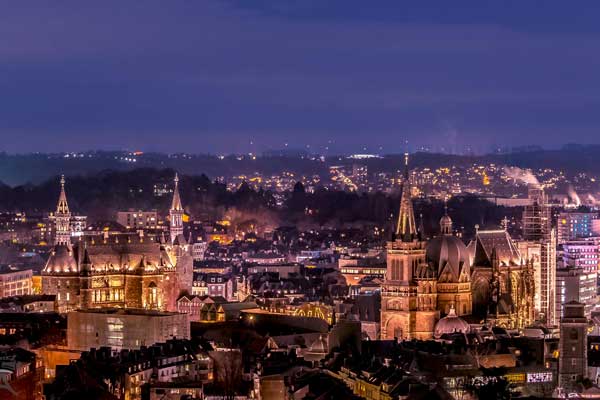
Interest (Riba) is a curse on the world. In Aachen, Germany, interest is 12% of the cost of rubbish collection; 38% of drinking water; 47% of sewage; and 77% of public housing. Furthermore, over the period 1950-1989, German GDP increased twenty two times, but interest on the National Debt increased seventy five times!
50% of the price of all goods and services relates to borrowing. Generally, interest causes 80% of the people to pay out more than they receive; 10% are in balance; and 10% receive more than they pay out (Kennedy, 1995).
Social consequences of interest
In India high interest causes farmer suicides – one every half hour (Sharma, 2006). 200,000 farmers committed suicide between 1997 and 2010 (Rupee News, 2010,). Many farmers have to sell one of their kidneys.
Cost of capital projects doubled or trebled: clean water/electricity generation
prevented
The cost of capital projects is doubled, tripled, quadrupled or more by the use of interest-bearing money particularly when the interest is compounded.
Consequently, every day in the world, ten thousand people die from the effects of dirty water (Dirty water.). Good water supply and sewage systems use
well-established technology but, in practice, because of compound interest, such projects cannot be built or, if they are built, the cost is inordinate.
Consider the UK Humber Bridge. Starting at £28,000,000, compound interest (with some price rises) took the cost of the Bridge to £439,000,000. That’s fifteen times higher! Yet the Bridge is profitable! Every year, its operating costs – repair, maintenance and salaries – are less than the fees received from travellers crossing the Bridge (Humber Bridge, 2019).
And it is the same with clean electricity generation. In the UK one project – tidal lagoons in the Severn estuary – would generate 10% of the UK’s electricity. Yet, because of compound interest, the project had to be cancelled,
Appendix Four — No true Islamic Finance or Economics
Appendix Four – No true Islamic Finance or Economics
Nowhere at present does there exist either a true Islamic Finance or a truly modern Islamic Economy. There are only options purporting to be Islamic e.g.:-
a) ‘Islamic Finance’ which is better than Western finance (because there is more focus on the real economy) but it also disguises Riba/interest by various legal forms and so is purportedly free from interest when, in reality, it is not.
Moreover, it is NOT committed to spreading productive ownership to everybody.
NB. In 2006, Harvard University (USA) held a big conference attended by Islamic academics, bankers etc. The conference (entitled Integrating Islamic Finance into the Mainstream) asserted that ‘Islamic Finance’ is only another brand name for Western banking/finance (which is why Western banks have ‘Islamic windows’). Thus the Americans were claiming Western economic and financial superiority (and political and cultural superiority) and the Muslim academics at the conference were fool enough to agree.
b) The use of gold is advocated by some because it would contain inflation, discourage irresponsible lending and weaken the West’s power to put countries into never-ending debt. Nevertheless, at the same time, the use of gold would also fail to spread the real economy to every individual in society; result in an increase of rich- poor division; and NOT eliminate, or even moderate, Riba/interest.
Moreover, gold as currency is not demanded by the Prophet (Anjum, 2005. Chapra, 1996). HOWEVER, a gold-backed money supply is possible and it may become a major part of future monetary reform.
Appendix Five — Other Aspects of the Binary Economy
Appendix Five – Other Aspects of the Binary Economy
Other aspects of the Binary economy are:- i) Limitation of bank ability to create new money out of nothing The commercial banks would generally not be allowed to create new money on the huge scale as they do today (but some creation would remain).
Banks would be able to lend their own money (at interest or as Islamic Finance) and, with permission, depositors’ money (Toutounchian, 2002).
ii) Banks to administer the new money supply
The commercial banks would also administer the interest-free supply charging only fair administration cost (Gafoor, 1995, 2004) on the conditions of real economy and its spreading; collateral; and proper business plan. The money is repaid to the national bank for cancellation. Any bank not implementing the conditions would lose the privilege of administering the interest-free supply.
iii) Bank deposits to remain the property of the depositor Money in bank accounts will remain the property of the depositor. It is outrageous that, at present, the banks legally own all the money in bank accounts. In fact, it’s worse than that – the G7 countries, and others, have now taken legal powers which not only enable the stealing of the deposits of customers but also enable the population as a whole to be forced to bail out the banks!
Appendix Six — Micro-credit, Small Businesses and Farms
Appendix Six – Micro-credit, Small Businesses and Farms
Often a woman may never have travelled more than a few kilometres from her matrimonial home, be regularly attacked by her husband and fail to get her children educated. However, micro-credit includes training and she gets a chance to pay for education. Thus she can become the bread-winner and so, over time, the power imbalance with her husband and men in general becomes corrected.
Unfortunately, the ‘free market’ has battened onto e.g., Bangladeshi women – rural lenders charge 100-250% p.a. and commercial lenders charge 50-60%. Grameen Bank (and similar organisations) charge about 34% because they borrow at 17% and then the next 17% is for:-
a) the high administrative cost of collecting small sums in rural areas b) the training given to potential borrowers. Grameen Bank and similar organisations achieve a 98% repayment rate. With interest-free loans (at an effective rate to the borrower of 17%), repayment would be 100%.
Start-ups, small businesses and small farms are often crushed by interest- bearing debt. But interest is not necessary when money is put into productive capacity. As long as there is provision for collateral and administration cost, there is no reason at all for interest. Interest-free finance is essential (Alam, 2005).
References
Anjum M.I. (2004). Globalization at Crossroads of Warfare, Revolution, and Universalization: the Islamic Panacea, Stratagem and Policy Instruments, paper presented at International Conference “Harmonising Development and Financial Instruments by Shariah Rules for Ummatic Integration“, International Islamic University, Chittagong, Bangladesh, 2004.
Anjum M.I. (2005). Towards a Progressive Pan-Islamic Monetary Regime paper in Choudhury M.A. (ed.) (2006), Money and Real Economy, Wisdom House Academic Publications, London & New York.
Anonymous (2023). The Voice of Listening, Red Balloon Publishing. Bognor Regis, UK.
Ashford R. & Shakespeare R. (1999). Binary Economics – the new paradigm, University Press of America, Lanham, Maryland, USA.
Bee S. et al. (2005). Rise and Fall of Knowledge Power: an In-depth Investigation, paper presented at International Conference “A Universal Paradigm of Socio- Scientific Reasoning”, Asian University of Bangladesh, December, 2005.
Bianchi R. (2006). Islamic Finance and the International System: Integration without Imperialism, paper presented at 7th Harvard Forum on Islamic Finance, “Integrating Islamic Finance into the Mainstream”, Harvard University, April, 2006.
Chapra M.U. (1996). Monetary Management in Islamic Economy in Islamic Economic Studies, vol. 4, no.1, Dec.1996).
Choudhury M.A. (1997). Money in Islam, Routledge, London.
Choudhury M.A. (2006). Money and Real Economy, Wisdom House Academic Publications, London & New York.
Dirty water. https://www.theworldcounts.com/challenges/planet-earth/freshwater/deaths-from- dirty- water/story#:~:text=Dirty%20water%20causes%20the%20death%20of%20a%20human,equivalent%2 0to%20a%20jumbo%20jet%20crashing%20every%20hour
el-Diwany T. (2003). The Problem with Interest, Kreatoc Ltd., London, UK
Forbes (2011). http://www.forbes.com/sites/bruceupbin/2011/10/22/the-147- companies-that-control-everything/
Gafoor A. (1995). Interest-free Commercial Banking, Apptec Publications, Groningen, The Netherlands.
Gafoor A. (2004). Interest, Usury, Riba, and the Operational Costs of a Bank, Apptec Publications, Groningen, The Netherlands.
Gandhi M. K. (1960). Trusteeship, Navajivan Trust Publication, Ahmedabad, India.
Ghazanfar S.M. (2005). The Economic Thought of Abu Hamid Al-Ghazali and St. Thomas Aquinas: Some Comparative Parallels and Links, paper presented at 1st Canadian Forum on Islamic Economics and Finance, McGill University, Montreal.
Haneef M.A. & Furqani H. (2005). Usul al-Iqtisad as a Pre-requisite in Developing Contemporary Islamic Economics, paper presented at International Conference “A Universal Paradigm of Socio-Scientific Reasoning”, Asian University of Bangladesh, December, 2005.
Harari Y.N. - 1. https://www.youtube.com/watch?v=w7DohVZS5Yo Yuval Noah Harari is advisor to Klaus Schwab, founder of the World Economic Forum. He also foresees the end of existing religions and the family.
Harari Y.N. - 2. https://www.youtube.com/watch?v=MCJq3uT2Jys
Humber Bridge (2019). https://www.humberbridge.co.uk/wp- content/uploads/2019/08/HUMBER-BRIDGE-BOARD-ACCOUNTS-FINAL-1718.pdf
Kelso L. & Hetter Kelso P. (1990). Democracy and Economic Power, University Press of America, Lanham, Maryland, USA.
Kennedy M. (1995). Interest and Inflation-Free Money:y, Creating an Exchange Medium that Works for Everybody and Protects the Earth, Seva International; . Okemos, MI, USA.
Kuhn T. (1962). The Structure of Scientific Revolutions, University of Chicago Press, Chicago, USA.
Kurland N. et al. (2005). Capital Homesteading for Every Citizen, Economic Justice Media, Washington D.C.
Mangroves. https://news.mongabay.com/2018/05/new-study-finds-mangroves-may-store- way-more-carbon-than-we-thought/
McLeay M. et al. (2014) Money Creation in the Modern Economy. Bank of England Quarterly Bulletin 2014, Q1.
Moulton H. (1935). The Formation of Capital, The Brookings Institution, Washington, D.C.
Oxfam Report (2020). Oxfam America Annual Report, Oxfam, Boston, MA, USA.
Oxfam Report (2022). First Crisis, Then Catastrophe, Oxfam, Oxford, UK.
Piketty T. (2017). Capital in the Twenty-First Century. Translated by Arthur Goldhammer. Belknap Press, London.
Rupee News (newspaper), 14th May, 2010.
Sharma D. in The Hindu (newspaper), 31st January, 2006.
Siddiqi M.N. (Dec., 1994). Speech (summary of papers), School of Social Science, University Sains Malaysia, Pulau Pinang, Malaysia.
Smith A. (1776). The Wealth of Nations/ (2012), Wordsworth Classics of World Literature. Ware, UK.
Solo R. (1967). Economic Organisations and Social Systems, Bobbs-Merrill Company, Indianapolis, USA.
Standing G. (2011), The Precariat: The New Dangerous Class, Bloomsbury Publishing, London.
Toutounchian I. (2002), The Role of a Central Bank in an Islamic Banking paper presented at Conference on Islamic Banking, Bank of England.
Veblen T. (1899). The Theory of the Leisure Class (1994), Penguin Books, New York.
World Economic Forum. "8 Predictions for the World in 2030". https://www.youtube.com/watch?v=MKwENH-m4oU